


 Français
How to Choose a Truck Tie-Down Strap: The Complete Guide for Professionals
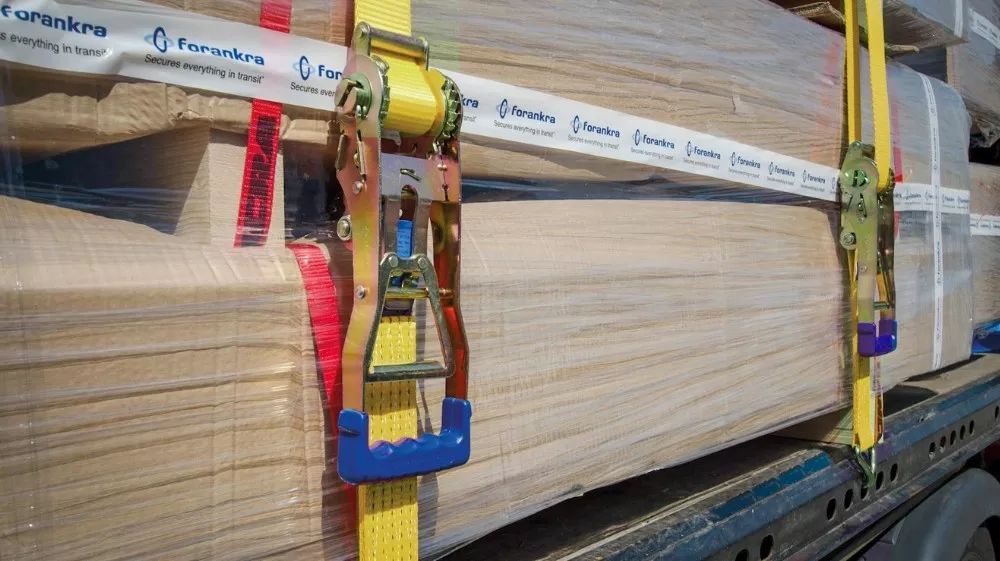
Road freight transport—whether involving a heavy-duty truck, a utility vehicle, a flatbed truck, or a trailer—requires complete cargo security. An improperly secured load can cause the vehicle to become unstable, damage the cargo, lead to a failure of the securing system, or result in an accident, often a serious one.
At Forankra, we know that tie-down straps are essential equipment for any transportation professional. When used correctly, they allow you to secure, fasten, and stabilize any type of load, thereby ensuring the safety of both goods and people.
Choosing a tie-down strap is not just about price. Load capacity, tensile strength, length in meters, width (25 mm, 50 mm, 75 mm…), material type, hook type, compliance with EN 12195, the securing system used, and conditions of use are all essential criteria.
This Forankra guide details the technical factors for selecting a suitable or custom strap that complies with current standards and meets the requirements of transportation professionals.
What is a tie-down strap?
A tie-down strap is an essential textile fastening accessory used to secure goods, equipment, or machinery during transport. It is suitable for various types of vehicles, such as flatbed trucks, box trucks, vans, refrigerated trucks, utility vehicles, and trailers. It effectively holds a load in place using various securing methods to minimize the risk of shifting and accidents during transport.
The strap may consist of two parts: a short section featuring a hook and a tensioner connected to a strap strand, and a long section comprising a large strap strand with a second hook. Both parts must be properly identified with compliant labeling. However, some models consist of a single piece of fabric combined with a metal tensioning device, allowing for loop or belt-style securing.
In the transportation and logistics sectors, lashing straps play an essential role in ensuring the safety of carriers and reducing financial losses related to property damage. Their use must always comply with the manufacturer’s instructions as well as applicable standards, particularly EN 12195.
Why is it important to choose the right strap?
An unsuitable strap can lead to:
- The load slipping or tipping over
- Premature breakage
- Damage to the cargo
- Legal non-compliance
- Endangering users
- Conversely, a suitable strap:
- Ensures safety
- Provides a secure fastening
- Complies with the EN12195 standard
- Optimizes road transport
- Reduces the risk of accidents
What are the different types of tie-down straps?
There are several types of straps designed for different types of vehicles:
- Exterior tie-down straps for flatbeds and covered trailers
- Interior tie-down straps for vans
- Tie-down straps for securing small packages in light commercial vehicles or trailers
Key criteria for choosing a truck lashing strap
1. Lashing Capacity (LC)
LC, expressed in daN, corresponds to the maximum allowable load under direct tension. To determine the appropriate capacity:
• Estimate the actual weight of the cargo
• Add a safety margin
• Select the appropriate number of straps for the load
Examples:
• 800 to 1000 daN → small boxes, lightweight furniture
• 1,500 to 2,500 daN → pallets, household appliances
• 4,000 to 5,000 daN → heavy materials, industrial equipment
For heavy loads, using multiple straps and a lashing system helps distribute the tension and prevent breakage.
STF (Standard Tension Force)
STF (Standard Tension Force) refers to the tension force generated by the ratchet or tensioner. A high STF improves stability, ensures safety during securing, and reduces the number of straps required.
Why STF is important
- Load security: An appropriate STF ensures that the cargo remains stable, even when the vehicle experiences movement, vibrations, or sudden braking.
- Slip prevention: The higher the STF, the less likely the load is to shift or tip over.
- Compliance with standards: STF is a parameter defined by the EN 12195 standard, which allows for comparing different straps and selecting the one suitable for the load and type of securing.
- Strap durability: an STF that is too low can lead to gradual loosening and a risk of premature wear, while an STF that is too high can lead to a risk of the lashing rail tearing out as well as crushing the cargo.
Length and Lashing Capacity
The length of the strap plays a crucial role in its effectiveness. A strap that is too short will not properly cover the load, while a strap that is too long can make installation more difficult and increase the risk of loosening. It is therefore essential to accurately measure the required circumference around the cargo before selecting the appropriate strap.
The lashing capacity, expressed in daN, corresponds to the maximum working load the strap can withstand before irreversible deformation. Selecting a strap with a capacity slightly exceeding the actual weight of the load helps prevent breakage caused by unexpected movements or external stresses during transport.
The EN 1295-2 Standard
In Europe, the EN 1295-2 standard sets out the requirements for lashing straps. In particular, it specifies the permitted materials, testing procedures, and permissible load capacities. When purchasing, it is important to check several points: Clear labeling indicating the nominal length, the strength expressed in daN (1 daN corresponds approximately to 1 kg), and the manufacturer’s identity.
Before use, the label on a lashing strap must be perfectly legible and contain essential information to ensure its compliance and proper use.
In particular, it must include:
- LC (Lashing Capacity): maximum capacity of the strap (in daN), used for lashing calculations.
- STF (Standard Tension Force): residual tension force after tightening, essential for friction lashing. It must be ≥ 10% of the LC.
- SHF (Standard Hand Force): standardized manual force of 50 daN, used to determine the STF (without tools or levers).
- Strap length: total length or detailed length depending on whether the strap is in one or two parts.
- Strap material: identified by a color code (polyester, polypropylene, or polyamide).
- EN 12195-2 standard: proof of compliance with European requirements.
- Manufacturer’s name: enables product traceability.
- Year of manufacture: information provided for equipment tracking.
Different Methods of Securing Cargo
Blocking
Securing a load involves blocking the cargo in all directions against the vehicle’s body structure (front deck, side walls, and rear doors) or against securing devices (bars, nets, etc.).
Secure securing is only effective if the following conditions are met:
- There are no gaps in the load between the various items of cargo
- The securing forces used are sufficiently strong to absorb the inertial forces generated during transport
Diagonal Securing
For diagonal securing, four securing devices are required. One device must always be provided for each of the four corners of the load. The securing devices must be tensioned diagonally across the loading platform.
Combined Diagonal and Angled Lashing
In practice, the combination of angled lashing and diagonal lashing is rarely used. However, it serves as an alternative for effectively securing heavy cargo, especially in the direction of travel.
Anti-rebound lashing (head loop)
Loop lashing is a direct lashing method. Lashing equipment is placed in a loop at the front, rear, or sides of the load and secured to the lashing points on the vehicle.
Side loop lashing
Side loop lashing is a direct lashing method. Lashing equipment is arranged in loops on the sides of the cargo and secured to the lashing points on the vehicle.
A side loop can replace a vehicle’s side walls when they are absent or when the dimensions of the cargo prevent it from coming into contact with them. A side loop can secure the load only in the lateral directions (right and left). This type of securing is useful for cylindrical loads.
Installation and Use of a Lashing Strap
To install a lashing strap, start by inserting the free end into the ratchet spindle. The strap is then threaded through the spindle to remove any slack. Tightening is performed using the crank handle, and the handle is locked after verifying proper alignment and correct tension of the assembly.
Removal is just as simple. Pull the trigger toward the rear handle, then open the ratchet fully to release the strap from the spindle. Finally, fully release the strap by pressing the trigger before closing the mechanism.
Choosing the right tie-down strap is a real asset in terms of safety and peace of mind, whether for a move or for the occasional transport of heavy or bulky loads. Forankra offers a complete range of tie-down straps tailored to the needs of professionals.
Maintenance of a lashing strap
Regular inspections should include:
• The fabric portion
• The metal portion
• The steel hook
• The stainless steel ratchet
• Check for tears or fraying
It is recommended to store the strap in a place protected from moisture and sunlight.
Conclusion
Choosing the right truck tie-down strap is more than just a recommendation—it’s a commitment to safety, performance, and peace of mind on every trip.
With reliable securing solutions that comply with current standards and are built to last, Forankra supports transportation professionals every day.
Because every load matters, investing in a high-quality textile lashing strap means protecting your cargo, keeping your teams safe, and driving with confidence today and tomorrow.
FAQ on the Use of Load-Securing Straps
What are the major risks of inadequate load securing?
Improperly secured loads increase the risk of shifting or falling during transport, which can cause significant property damage and endanger people’s safety. It can also negatively impact the vehicle’s fuel efficiency.
• More frequent property damage
• Increased likelihood of traffic accidents
• Higher transportation costs
• Vehicle impoundment by law enforcement (fines in countries enforcing the regulation)
Should staff be trained in the use of tie-down straps?
Yes, it is strongly recommended to implement dedicated training. This enables teams to learn best practices for selecting, installing, and properly inspecting securing devices, thereby reducing the risk of human error and improving overall operational safety. To this end, Forankra offers training courses dedicated to securing cargo.
Where can I find lashing straps?
Forankra relies on a strong distribution network of authorized distributors and resellers located throughout France and internationally. Please feel free to contact us to find the distributor nearest you.
In Same Category
- Everything You Need to Know About Ratchet Straps
- 9 conseils pour bien choisir vos plaques de roulage
- Safety Stand : A Guide to Ensuring Safe Dock Operations
- Loading ramps for people with disabilities for vehicles, public buildings, and thresholds
- Choosing the Right Loading Ramp: Tips and Expert Advice