


 Français
How to choose an aluminum loading ramp?
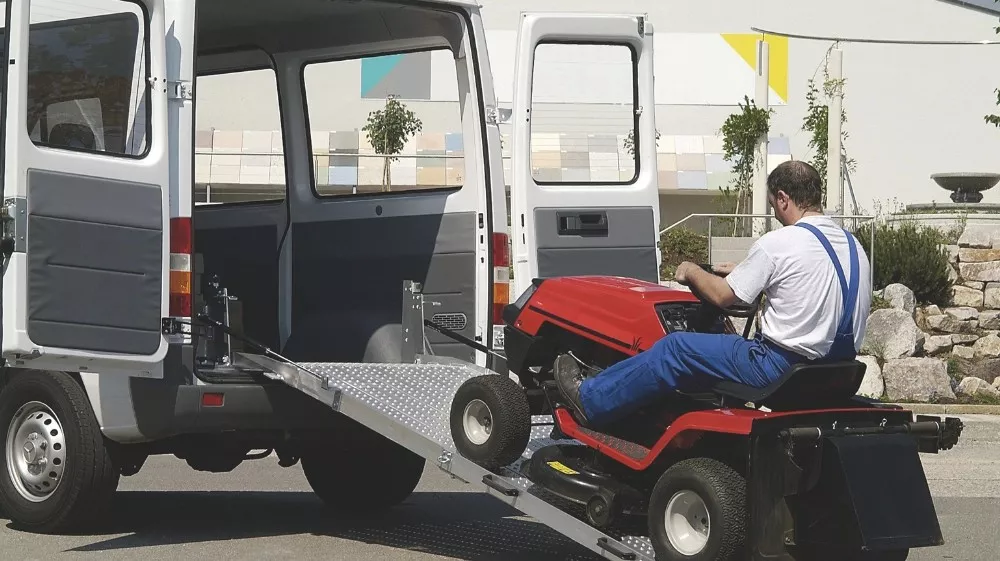
A pallet jack stuck at the loading dock threshold, a forklift struggling on a slight incline. Aluminum loading ramps solve these everyday problems. But choosing the right model is crucial one that can handle the load, fits your specific setup, and protects your operational teams. This guide from Altec France will help answer all your questions.
| In summary |
| Load capacity is the number 1 criterion: add the weight of the machine, the operator and the accessories, then add a 20% safety margin. |
| The length of the ramp depends directly on the height to be overcome and the type of equipment (maximum slope of 12% for people with reduced mobility, 30% for construction equipment). |
| Aluminium stands out for its lightness, corrosion resistance and maintenance-free durability. |
| Fixed or removable ramp, the choice depends on the frequency of use and the required mobility. |
| A non-slip surface and a reliable anchoring system are essential for safety. |
Why choose an aluminum loading ramp?
A loading ramp is an inclined structure designed to facilitate passage from one level to another. It allows access from the ground to a vehicle, a delivery platform, or an elevated storage area.
Weight-to-strength ratio
Aluminum offers high mechanical strength with a lower density than steel. An aluminum ramp weighs two to three times less than a steel model of equivalent capacity. This advantage is particularly important when the equipment is frequently moved or handled by a single person. A tradesperson who loads their van every morning benefits from increased comfort and time savings.
Natural corrosion resistance
Aluminum does not rust. It resists moisture, temperature variations, and chemicals without any special treatment. This property guarantees superior longevity and virtually no maintenance.
Compact and easy to store
Folding or removable aluminum loading ramps can be stored in a small space. Tradespeople can easily fit a folding ramp in their van to streamline their journeys.
How do you calculate the correct load capacity?
Load capacity is the number one purchasing criterion to ensure the safety of handling teams.
Calculating Your Needs Accurately
To estimate your actual needs, always add together:
- The unladen weight of the machine or load to be moved
- The weight of any attachments installed on the machine
- The weight of the operator (if present on the ramp)
- The mass of the goods being transported
Next, add a 20% safety margin to absorb the kinetic impact forces generated by the movement.
The Importance of Weight Distribution
The strength of an aluminum loading ramp varies depending on the wheelbase or track spacing of the vehicle being loaded. Manufacturers provide precise load charts based on wheelbase (generally classified into ranges: 1000 mm, 1500 mm, 2000 mm). Always verify the compatibility between your vehicle's wheelbase and the chosen ramp model.
Adapting Capacity to Your Sector
Needs vary considerably depending on the industry:
- Construction and heavy industry: tracked or wheeled equipment (mini-excavators, compactors) with capacities from 3 to 10 tons and more
- Logistics and tradespeople: pallet jacks, flight cases, rolling stock, up to 2 tons
- Landscaping and garden equipment: ride-on mowers, small tractors from 500 kg to 2 tons
- Medical and accessibility (PRM): wheelchairs, lower capacities, strict regulatory constraints
What length and what angle should I choose?
The length of a loading ramp is related to the height to be overcome. This parameter determines the angle of inclination and therefore the safety and ease of maneuvering of the ramp.
Tilt limits to be observed
Excessive tilt can cause the equipment to tip backward or lock the wheels. Maximum recommended limits per type of use:
| Type of gear | Max recommended slope | Recommended length | Typical use | |
| Wheelchair (PRM) | 5 % to 12 % | 2 to 3 m | Universal accessibility | |
| Motorcycles, quad bikes, leisure activities | 15 % to 20 % | 1.5 to 2.5 m | Motorcycle transport, trailer | |
| Pallet truck, trolley | 15 % to 20 % | 1.5 to 2 m | Logistics, delivery | |
| Construction equipment | 30 % maximum | 2.5 to 4 m | Construction and public works, heavy industry |
Check the usable width
The ramp width must be suitable for the wheelbase or track width of the machine. Ensure that the wheel or track fits perfectly onto the platform without rubbing against the protective edge. Allow sufficient clearance on each side for comfortable and safe maneuvering.
Fixed ramp or removable/folding ramp, which to choose?
The choice between a fixed ramp and a removable or folding ramp depends on three factors: the frequency of use, the work context, and storage or mobility constraints.
Fixed straight ramp
These models offer good rigidity during maneuvers. Permanently anchored to a dock or dedicated vehicle, the fixed ramp is ideal for industrial uses such as logistics centers, warehouses, and permanent loading stations.
The removable ramp: versatility for mobile professionals
The removable ramp can be quickly installed and removed as needed. It is ideal for tradespeople and service providers who work at multiple locations or with different vehicles. The lightweight aluminum models easily slide under the truck chassis after use.
The folding ramp
The folding ramp is permanently fixed to the rear of the van, unfolds in seconds, and folds vertically to save interior storage space. It is often the preferred choice for landscapers, delivery drivers, and event service providers. For even more compact needs, the removable folding ramp stores in minimal space and can be repositioned as needed.
Quick decision rule: intensive use at a fixed location → fixed ramp. Frequent movement or variable configurations → removable or folding ramp.
Essential safety devices
In addition to capacity and format, several safety elements are non-negotiable when choosing and using a loading ramp.
The anti-slip surface
A good loading ramp absolutely must have an anti-slip surface. Aluminum profiles with perforated or grooved surfaces guarantee grip even in the rain or in the presence of mud.
Anchoring System
The stability of the ramp during use depends directly on its anchoring system. Several options are available depending on the application:
- Pin or stud fixing: for equipment trailers, guarantees complete immobility under heavy loads
- Standard support lip: a quick and easy solution for vans and utility vehicles
- Anchoring strap: connects the rail head to the receiving chassis to prevent any slippage or detachment under load
- Integrated sliding rail: a premium solution for fixed, quick-deploying ramps
Always check the compatibility of the anchoring system with your trailer, tailgate or dock before purchasing.
The implementation procedure
Regardless of the ramp chosen, follow these fundamental steps before each use:
- Park the carrier vehicle on perfectly level ground and engage the parking brake.
- Deploy the stabilizing jacks under the trailer to secure it firmly.
- Align the ramps precisely according to the track width of the vehicle to be loaded.
- Securely lock the anchoring system (pins, strap, or lip) before any maneuvering.
The range of Altec France aluminum loading ramps
A recognized specialist in the manufacture and distribution of aluminum loading ramps and bridges, Altec France offers a wide range of solutions adapted to all professional uses.
| Altec France range | Application | Load capacity | |
| Equipment carriers, flatbeds and trailers | Trailers, tracked/wheeled vehicles | 2 to +10 tonnes | |
| Van & Light Commercial Vehicle | Pallet trucks, flight cases, rolling stock | Up to 2 tonnes | |
| PMR | Wheelchairs, public access | According to PMR standard | |
| Crossing plates | Platforms, sidewalks, steps, rails | Variable |
Its products are renowned for their reliability and the quality of their aluminum construction. The range includes removable, folding, collapsible, and fixed ramps, available in numerous lengths and load capacities to precisely meet the needs of every professional context.
FAQ — Frequently Asked Questions
What are the advantages of an aluminum loading ramp?
Aluminum offers several advantages. It is two to three times lighter than steel, naturally resistant to oxidation and rust (no special maintenance required), and boasts superior durability.
How do you calculate the correct load capacity for a ramp?
Add up the total mass of the vehicle (or cargo), the operator, and any additional equipment. Then add a 20% safety margin beyond the actual weight to absorb the kinetic impact forces generated by movement.
When should you choose a fixed ramp over a removable one?
A fixed ramp is ideal in logistics centers and permanent workstations, where maneuvers are repeated cyclically and require a smooth pace. A removable or folding ramp is preferable for mobile operations and multi-site configurations.