


 Français
Loading ramps for people with disabilities for vehicles, public buildings, and thresholds
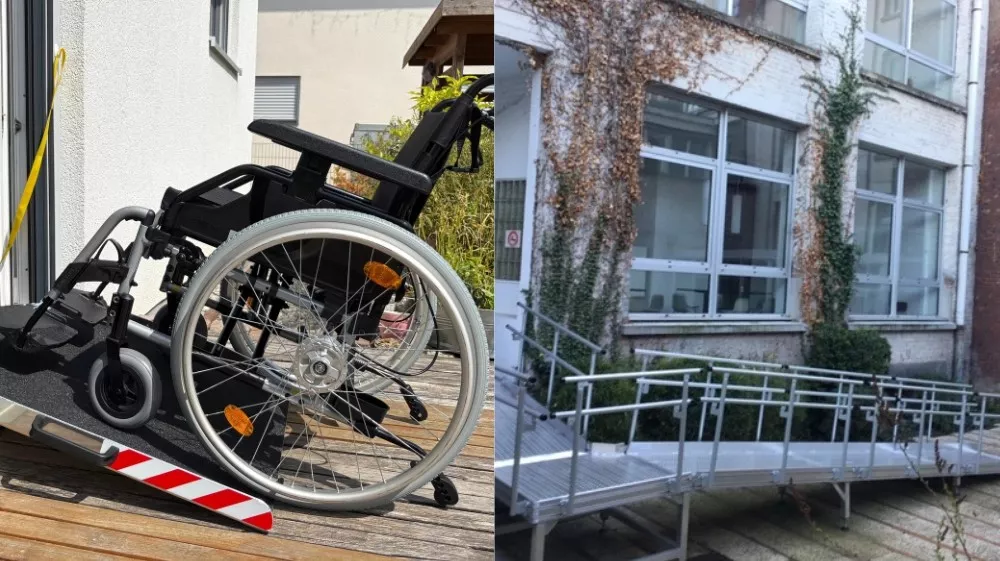
Accessing a commercial vehicle, getting up a step, reaching a sidewalk, or entering a public building requires a specific piece of equipment: a loading ramp. Without this equipment, a change in elevation blocks the path for a person in a wheelchair.
Each site has its own constraints: height to be crossed, available width, usable length, slope, and ground conditions. An access ramp compensates for these differences while ensuring safe passage.
The choice is based on specific technical criteria such as load capacity, weight capacity, dimensions, non-slip surface, and material. Whether aluminum or galvanized steel, each material is suited to a specific use. A portable, foldable, or removable ramp meets temporary needs, while a fixed model ensures permanent access.
Compliance is also a key consideration. Equipment intended for public-access facilities must adhere to specific regulations to ensure equitable accessibility for all users, regardless of their needs or level of independence.
Understanding Wheelchair Access Ramps and Their Uses
Definition and Function of a Wheelchair Access Ramp
A wheelchair access ramp connects two levels without a sudden change in elevation. It makes it easier for a person with a disability to navigate a step, a threshold, or a curb.
In addition to simply helping users clear obstacles, it helps maintain independence and ensures smooth mobility. When used correctly, it reduces the effort required and minimizes the risks associated with maneuvering.
Depending on the site’s layout, it can replace or complement a stair nosing, a tactile paving strip, or a rubber threshold.
Differences Between Loading Ramps, Access Ramps, and Threshold Ramps
Loading ramps for people with reduced mobility are primarily used for transportation and access to vehicles, particularly vans and converted utility vehicles.
Access ramps for people with reduced mobility are more commonly used in buildings and public spaces. They bridge small height differences, both indoors and outdoors.
Depending on your needs, several options are available:
- Folding ramp
- Removable ramp
- Aluminum ramp
Main Applications
Access ramps are used in many everyday situations:
- Vehicle access for people in wheelchairs
- Public access for accessibility purposes
- Crossing curbs, steps, or obstacles
Their versatility explains why they have become essential accessibility equipment today.
Types of Loading Ramps for People with Disabilities
Foldable Mobile Ramps
The folding ramp is one of the most popular solutions due to its practicality. Easy to transport and store, it is suitable for both occasional and regular use.
It offers an excellent balance for both individuals and professionals who need a flexible solution. Its folding mechanism makes it easy to handle and minimizes its bulk.
Fixed Ramps
Fixed ramps are designed to provide permanent access. They are particularly well-suited for public access buildings, municipal facilities, and buildings that regularly welcome the public.
They may include:
- A guardrail
- A tactile paving slab for people with disabilities
- A non-slip stair nosing
Their installation plays a key role in ensuring buildings comply with regulations and offers a long-lasting solution.
Ramps for Vehicles for People with Disabilities
Vehicle ramps facilitate access to a van or a converted utility vehicle.
There are several types of ramps:
- Swivel ramp
- Removable ramp
- Folding ramp
The choice generally depends on the vehicle’s configuration and frequency of use.
Threshold Ramps and Modular Solutions
When it comes to bridging a small height difference, threshold ramps offer a quick and easy solution.
Common solutions:
- Sidewalk ramps
- Aluminum thresholds
These devices make it easier to move around both indoors and outdoors. They often provide a simple solution to problems that can be very disruptive to daily life.
Technical Specifications of Access Ramps
Materials Used
Access ramps are made from a variety of materials, each with its own advantages:
- Aluminum (anodized)
- Reinforced polyethylene
- Rubber
Aluminum offers a good balance between light weight and ease of handling. Galvanized steel is suitable for heavy-duty use.
Load Capacity and Recommended Uses
Load capacity is a key criterion.
It takes into account:
- The person’s weight
- The wheelchair’s weight
- Equipment being transported
Each product specifies a maximum load that must be observed. Ignoring this information can compromise user safety and accelerate equipment wear and tear.
Dimensions, Width, and Length
Dimensions directly affect ease of use.
- Width suited to the wheelchair
- Length of the ramp
- Height to be crossed
- Maximum obstacle height
A ramp that is too short creates a steep slope, making movement more difficult. Conversely, a properly sized ramp improves stability and reduces the effort required to cross it.
Regulations and Standards for Access Ramps for People with Disabilities
Accessibility Standards for Public Access Facilities
Public access facilities must ensure that access for people with disabilities complies with current regulations: the Law of February 11, 2005 (Law 2005-102).
Ramps are among the recognized solutions for ensuring accessibility.
Regulatory Slope
The slope is calculated as follows:
slope = height / length × 100
A slope that is too steep reduces stability and makes it difficult to navigate.
Best Practices for Compliance
Before use, it is recommended to:
- Check the ramp’s fastenings
- Inspect the non-slip surface
- Verify the stability of the ground
- Observe the maximum load capacity
These simple checks help minimize risks and extend the equipment’s service life.
How to Choose a Loading Ramp for People with Disabilities
Needs Assessment
Choosing a ramp always begins with a precise assessment of your needs. You should consider:
- Type of wheelchair
- Height to be crossed
- Occasional or regular use
- Site environment
Technical Considerations
Several factors must then be evaluated:
- Load-bearing capacity
- Effective width
- Length
- Overall dimensions
- Product weight
Ramp Type
Depending on the intended use, different models may be preferred:
- Portable ramp: flexible use
- Fixed ramp: permanent installation
- Wheelchair ramp: vehicle use
The goal is to find the right balance between practicality and safety.
Installation and Use of a Wheelchair Ramp
Installation
Proper installation ensures the ramp’s effectiveness.
It involves several steps:
- Placement on a level surface
- Secure fastening or support
- Checking the slope
- Load testing
Daily Use
Certain best practices make daily use easier:
- Aligning the wheelchair
- Moving at a steady pace
- Clean and stable surface
- Adhering to the maximum load limit
Mistakes to Avoid
Certain mistakes are particularly common:
- Slope too steep
- Overloading
- Insufficient securing
- Slippery surface
Innovations and Advanced Solutions
Wheelchair ramps are constantly evolving to meet users’ changing needs.
Today’s options include:
- Swivel vehicle ramps
- Hybrid loading and accessibility solutions
- Articulated guardrails
- Logistics flow management in utility areas
FAQ – Access Ramp for People with Disabilities
Which ramp should I choose for a wheelchair?
The choice depends on the height, the available length, and the type of use (portable or fixed).
What load capacity should I choose for an access ramp for people with disabilities?
It must be sufficient to support the weight of the person, the wheelchair, and any equipment being transported.
What slope should a wheelchair ramp have?
It depends on the ratio of height to length.
What materials are best for a wheelchair ramp?
Aluminum, galvanized steel, reinforced polyethylene, or rubber, depending on the intended use.
How do you install a wheelchair ramp?
On a stable surface, using appropriate fasteners and conducting a safety test beforehand.
Is a ramp required in public access facilities?
Yes, it contributes to ensuring accessibility in public access facilities.
Where can I buy a ramp for people with reduced mobility?
At Altec France, which offers a wide range of aluminum ramps for people with reduced mobility.
What is the difference between a portable ramp and a fixed ramp?
A portable ramp is flexible, while a fixed ramp is permanently installed.