


 Français
Side guards to protect cyclists: compliance and safety of commercial vehicles
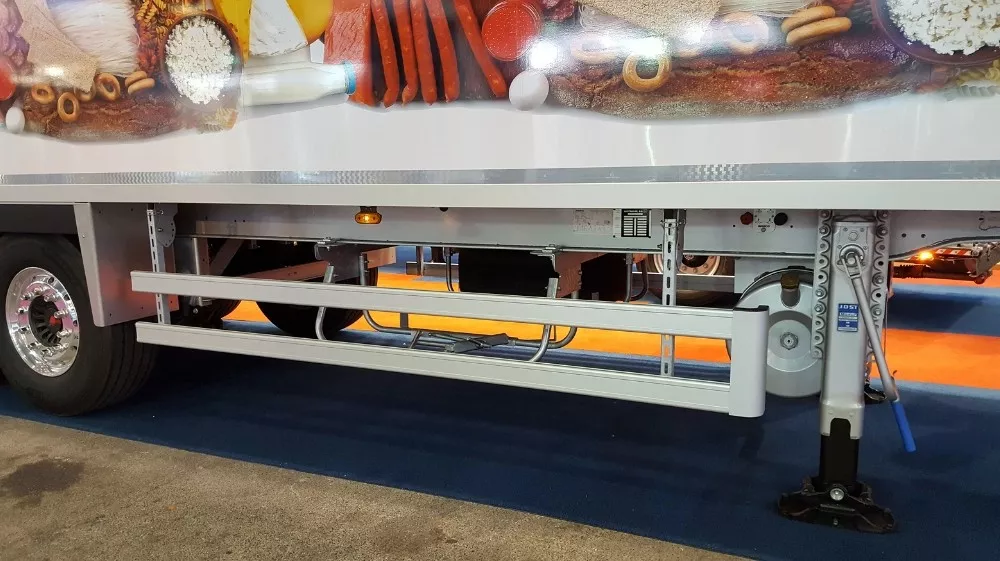
With the increasing density of urban traffic and the rapid growth of active transportation, the coexistence of heavy-duty vehicles and other road users (cyclists, pedestrians, scooter riders, etc.) has become a key issue for transportation and logistics professionals.
While side guards designed to protect cyclists are not a recent innovation, their importance has continued to grow in recent years. Changes in road usage, combined with a sharp increase in interactions in urban areas, now place this equipment at the heart of risk prevention strategies.
Beyond safety, the stakes are high: operator liability, brand image, insurance cost control, and regulatory compliance. In this context, side guards have become an essential element in significantly reducing the risk of serious accidents.
Side protection: how does it work?
Side protection: how it works and its benefits
Installed between the axles, on the sides of the vehicle, side protection systems act as a physical barrier designed to prevent anyone from being dragged under the chassis in the event of a collision.
Their role is both simple and essential: to prevent a vulnerable road user from becoming trapped under the vehicle, one of the most serious scenarios in an accident involving a heavy-duty vehicle.
Specifically, these devices help to:
- Prevent a cyclist or pedestrian from becoming trapped
- Reduce the severity of side-impact collisions
- Improve safety in dense urban environments
- Limit legal and financial risks for operators
Beyond their protective function, underrun guards also contribute to making the vehicle more visible in public spaces. They enhance the perception of safety among other road users, a key factor in areas with high traffic interaction.
Current Regulations
Side impact protection systems are not optional. They are governed by strict European regulations designed to ensure their effectiveness.
UNECE Regulation R73 requires their installation on most vehicles weighing over 3.5 tons.
This regulation specifies, in particular:
- Mechanical strength requirements
- Dimensions and coverage areas
- Installation requirements
For both body shops and vehicle operators, compliance with this standard is essential for vehicle certification and registration. It also serves as a common safety foundation across Europe.
Installation and Maintenance of Bicycle Guards
The effectiveness of a bicycle guard depends directly on the quality of its installation. Installation must be performed by a UTAC-certified body shop, in accordance with the manufacturer’s recommendations and regulatory requirements.
Improper installation can compromise the device’s performance and reduce its level of protection.
Maintenance also plays a vital role in the equipment’s durability and compliance. It is recommended to:
- Regularly check the fasteners
- Inspect for corrosion or deformation
- Immediately replace any damaged components
Rigorous monitoring ensures a consistent level of safety over time.
Urban Logistics: A Long-Standing Safety Standard
Recent changes in mobility policies are bringing about lasting changes in market expectations:
- Rollout of Low-Emission Zones (LEZs)
- Significant increase in urban cycling
- Increased requirements from clients and local authorities
In this context, side guards, although mandatory, are becoming a key differentiator.
They are now frequently included in tenders and considered a minimum safety standard. Some companies even go beyond regulatory requirements by mandating reinforced systems.
A Strategic Advantage for Body Shops
For heavy-duty truck body shops, the integration of side guards provides protection for everyone in urban areas.
Ensuring Compliance
A non-compliant vehicle cannot be operated. The integration of certified side guards immediately ensures the project’s compliance.
Creating value for the end customer
A better-equipped vehicle is:
- Safer
- More commercially attractive
- More resilient in the face of regulatory changes
Standing out in a competitive market
Side protection solutions can be adapted to numerous configurations:
- Trucks
- Trailers
- Body-equipped commercial vehicles
This modularity allows bodybuilders to offer customized, high-value-added solutions.
Forankra: A Complete Lineup, Designed for Professionals
Forankra’s lineup of side guards designed to protect cyclists has been developed to meet the needs of professionals in the transportation and commercial vehicle bodywork industries.
Key features:
- Compliance with UNECE Regulation R73
- Robust steel or aluminum structures
- Optimized weight to preserve payload capacity
- Quick and easy installation
- Wide compatibility with many chassis
These solutions integrate easily into various types of projects. The goal is clear: to ensure a high level of safety while maintaining the vehicles’ operational performance.
Conclusion
Side guards designed to protect cyclists are no longer merely a regulatory requirement; today, they serve as a strategic asset for the entire transportation value chain.
For both operators and body shops, investing in reliable, compliant solutions allows them to:
- Ensure safe operations
- Meet market demands
- Strengthen their competitive position
In an environment where safety is becoming a key performance criterion, equipping vehicles with appropriate side guards is both a responsible and profitable choice.
FAQ – Cyclist Guards
Which trucks must be equipped with cyclist guards?
All vehicles weighing more than 3.5 tons registered in the European Union must be equipped with side guards that comply with UNECE Regulation R73. This includes cargo trucks, tractor-trailers (for their trailers), and certain body-equipped commercial vehicles.
Steel or aluminum: which material should you choose for a truck bicycle guard?
Steel offers maximum strength and cost-effectiveness, making it ideal for urban trucks subjected to heavy use. Aluminum prioritizes lightness and preserves payload capacity, making it recommended for long-haul semi-trailers and vehicles operating in Low Emission Zones (LEZs) where every kilogram counts.
What is the UNECE R73 standard?
The UNECE R73 regulation is the European standard that defines the strength, dimensional, and installation requirements for side bicycle guards. It sets the approval criteria to ensure the effectiveness of these devices in the event of a side collision.
How do I know if my side guards are still compliant?
Check the condition of the fasteners (no play, no corrosion on the bolts) and the integrity of the bars (no deformation, cracks, or deep corrosion) every six months. After a side impact, always replace the affected components. Keep the certificates of conformity and maintenance invoices for vehicle inspections.
Can a non-certified body shop install bicycle guards?
Technically, yes, but the vehicle will not be approved and cannot be legally driven on public roads. Only a UTAC-certified body shop can certify that the installation complies with regulations and provide the necessary documents for the vehicle’s approval by the Department of Motor Vehicles.