


 Français
How does a tie-down strap work?
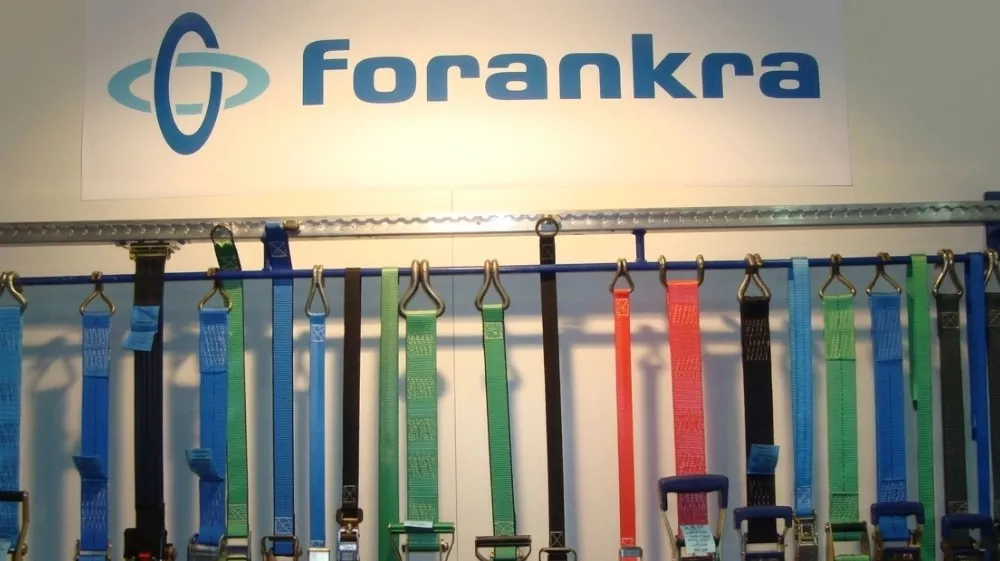
Lashing straps are among the most important pieces of equipment for road transport. Improper use can lead to serious accidents, damage to cargo, and penalties for the driver. Their use is based on simple rules, provided they are followed correctly.
This Forankra guide covers the different types of straps, the role of the ratchet tensioner, the steps for securing cargo, common mistakes, and maintenance guidelines.
The Different Types of Lashing Straps
The choice of a lashing strap depends on its intended use: type of vehicle, nature of the load, and transport conditions. Here are the main types.
The Interior Lashing Strap
This type is used to secure cargo inside utility vehicles, hard-sided trucks, and vans. It secures pallets, industrial packages, and irregularly shaped loads against the walls or on the floor.
The exterior tie-down strap
This model withstands harsh weather conditions. It is used on open flatbeds, semi-trailers, and agricultural trailers exposed to the elements, UV rays, and flying gravel.
The water-repellent lashing strap is treated to repel water and resist moisture, thereby extending its service life in environments exposed to the elements
The automatic retractable lashing strap
This system incorporates a storage and tensioning mechanism. It facilitates repetitive operations during frequent loading.
The car carrier lashing strap
This model is used for transporting vehicles on flatbeds or car carriers. It relies on reinforced attachment systems: swivel hooks, wheel straps, or axle straps. The vehicle remains secured without aggressive contact with the bodywork.
Motorcycle Tie-Down Strap
This model secures motorcycles, scooters, and ATVs. It uses flexible buckles and handlebar clamping systems designed for two-wheeled vehicles.
The ratchet strap (or ladder-style ratchet strap)
This system uses a perforated strap. It allows for precise tension adjustment. The gradual tightening is suitable for sensitive or valuable loads.
How does the ratchet tensioner work?
The ratchet tensioner is the heart of the system. It applies tension and secures the load during transport.
The traditional tensioner
The lever operates via a back-and-forth motion. Each action winds the strap around the shaft and increases the tension. The mechanism locks automatically with each action.
The reverse ratchet tensioner
Tightening is achieved by closing the mechanism. This system reduces the effort required to apply tension. An internal guide improves force transmission and stabilizes the resulting tension.
Each tensioner displays a maximum working load (MWL) and a working load limit (WLL). These specifications are used to select the appropriate equipment for the load.
Key Components of a Tensioner
To fully understand how a tie-down strap works, here are the four components that make up a tensioner:
The main lever: This is the movable part that is operated to create tension. It winds the strap around the shaft.
The release lever: Located below the main lever, it releases the tension once the load is secured. It should be operated gently to loosen the strap smoothly.
The guide: The strap passes through it to wind properly. Ergonomic tensioners have two guides to optimize grip.
The shaft: This is what engages the strap and winds it as the lever is operated. It is the central component of the tensioning mechanism.
There are other tensioning methods, such as the lever-operated tensioner and the cam buckle as well.
How to Use a Lashing Strap? Steps to Follow
Here is the standard procedure for properly securing a lashing strap, step by step.
Step 1 — Open the Tensioner: Pull the main lever all the way open. Turn the spindle until the guide is pointing straight up, ready to receive the strap.
Step 2 — Secure the hooks One hook should be attached to an anchor point on the vehicle, on each side of the load. It is important to ensure that the hooks are securely engaged and cannot come loose.
Step 3 — Thread the strap through the guide Insert the loose end of the strap through the center of the tensioner’s guide, pulling it until it is engaged in the mechanism and there is no significant slack.
Step 4 — Tighten the strap Actuate the main lever with repeated movements. You need a minimum of 1.5 turns and a maximum of 3 turns. Any fewer turns will result in insufficient tension. Any more turns may damage the strap or the load.
Step 5 — Lock Close the lever until you hear the locking click. The strap is in place.
Step 6 — Check Before Departure Gently pull on the strap to confirm that it is properly tensioned and that the hooks are secure. This quick check prevents many accidents.
Good to know: Regulations recommend checking the tension of the tie-down straps after the first few miles of the trip, and then at every stop, as the load may shift and cause the straps to loosen.
Common Mistakes to Avoid
Here are the most common points to keep in mind when using a tie-down strap.
Never apply more than 3 turns of tension. A strap that is too tight can snap suddenly or cause the metal hooks to fly off with great force. The consequences can be very serious.
Do not twist the strap. A twisted strap does not distribute force evenly. Its strength is then significantly lower than specified.
Never tie knots. A knot significantly weakens the strap’s strength. If the strap is too long, it is better to neatly coil the excess rather than tie it in a knot.
Do not let the strap rest on a sharp edge. Sharp edges quickly wear down the fibers. Strap protectors (corner guards) should be used on the corners of loads.
Do not place your hand under the strap while tightening it. If it slips, the consequences can be serious.
Maintenance and Lifespan of a Lashing Strap
A well-maintained lashing strap lasts much longer. Here are the best practices to follow to ensure its longevity:
Regularly inspect the strap and the tensioner. Any cuts, fraying, deformation, or corrosion should result in immediate replacement of the equipment.
Clean without chemicals. Water and a soft cloth are sufficient. Solvents and harsh products damage the polyester fibers and weaken the strap.
Store in a suitable location. Straps should be stored in a dry place, protected from UV rays and extreme temperatures.
Adhere to the specified load limits. Each strap has a Load Capacity (LC) defined by the manufacturer. Any use exceeding this value poses a real risk to the safety of the driver and other road users.
Forankra Lashing Straps: A Range for Every Professional Need
Forankra offers a comprehensive range of lashing straps to meet the needs of professionals in the transportation and logistics industries. Each solution is designed to ensure optimal load security, in compliance with current standards.
Choosing the right tie-down strap depends on several complementary technical criteria:
- Vehicle type: utility vehicle, heavy-duty truck, flatbed, trailer, car carrier
- The nature, weight, and volume of the load: pallets, machinery, vehicles, construction materials
- The required lashing capacity (LC) and pretension force (STF)
- The type of tensioner: traditional or ergonomic ratchet, cam buckle
- Conditions of use: humidity, abrasion, UV exposure, extreme temperatures
- Frequency of use and safety requirements
Key Points About Lashing Straps
Lashing straps are technical equipment whose performance depends on the choice of materials and proper use. Following the installation steps and maintenance guidelines contributes to transport safety and compliance with the EN 12195-2 standard.
FAQ – Your questions about how a tie-down strap works
What is the difference between a ratchet strap and a buckle strap?
The ratchet strap allows for high tension thanks to a lever mechanism, making it ideal for heavy loads. The buckle strap (or cam strap) is easier to use but provides less tension, making it suitable for light loads.
How many turns should you make with the ratchet?
It is recommended to wrap the strap around the shaft 1.5 to 3 times. Fewer turns will result in insufficient tension.
Can a lashing strap be used to lift a load?
No. A lashing strap is designed to secure a load, not to lift it. For lifting, specific equipment such as certified slings must be used.
How can you tell if a strap is still usable?
A strap must be replaced as soon as it shows signs of wear: cuts, fraying, burns, deformation, or corrosion of metal parts. If in doubt, it is best not to take any risks.
Why shouldn’t you tie a knot in a strap?
A knot significantly reduces the strap’s strength, sometimes by up to 50%. This considerably increases the risk of breakage during transport.
How can you avoid damaging a strap?
It is recommended to use corner protectors (angle brackets) or protective sleeves when the strap comes into contact with sharp edges. You should also avoid