


 Français
Buying Guide for Spacer Plates
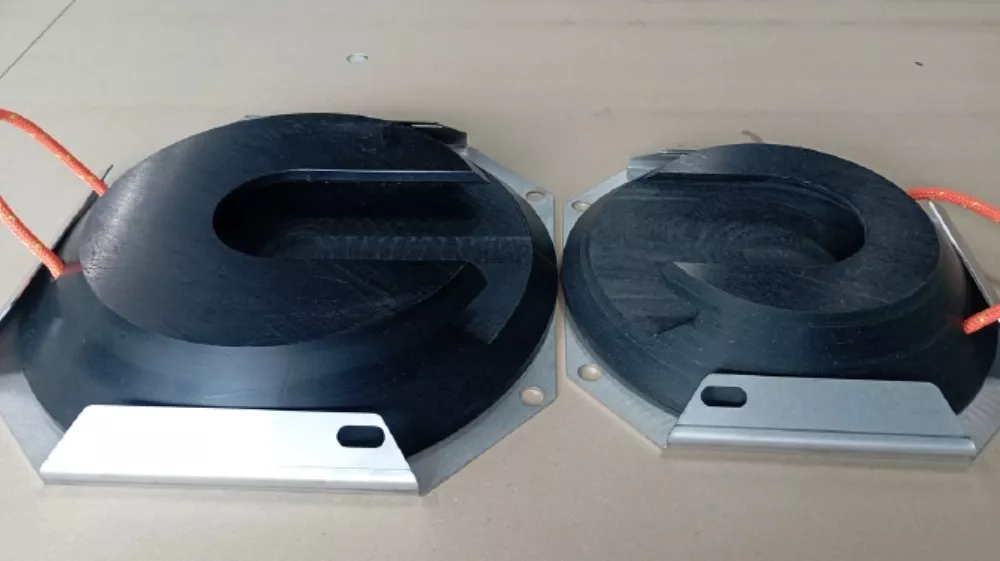
On construction sites, work at height relies on a factor that is often underestimated: ground stability. Aerial work platforms, mobile cranes, and telehandlers exert significant loads on small contact points. Without proper support, the ground can give way, with immediate consequences for safety and site operations.
The stabilizer plate, also known as a load-distribution plate, serves as this support between the machine and the ground. It contributes to the stability of the equipment, the continuity of operations, and compliance with requirements for lifting equipment.
For distributors and users, the choice depends on several factors: load capacity, ground type, and the dimensions and configuration of the stabilizers.
What is the purpose of a stabilizer plate?
A stabilizer plate is used to distribute the load from the stabilizers over a larger surface area. It limits the sinking of the machine’s legs and reduces instability during lifting operations.
On an aerial work platform or a mobile crane, stability depends directly on the quality of ground contact. Soil that is too soft or uneven can cause the machine to tip over or gradually sink.
The plate acts as an interface between the stabilizer leg and the ground. It distributes forces and improves the local bearing capacity of the ground.
This equipment is used in many environments: construction sites, industrial zones, urban operations, and maintenance work.
Construction walkways and aluminum ramps for machinery complement the equipment designed to secure work areas.
What are the different types of stabilizer plates?
Various solutions are available depending on site conditions:
- The square stabilizer plate is the most commonly used on construction sites. Its large contact surface makes it the most suitable solution for aerial work platforms and mobile cranes on stable ground. It is also possible to machine a recess directly into the plate (custom option).
- The round stabilizer plate provides uniform load distribution in all directions. It is very often used for large-sized stabilizers. The fact that the stabilizer is round greatly facilitates its installation
- The stacking block, also known as a stackable pad, is designed for soft or muddy ground. Its honeycomb structure allows it to be stacked with other pads to reach the desired height. Its non-slip surface, textured on both sides, minimizes any risk of slipping during stacking. It facilitates securing a machine during maintenance work.
- The notched pad, also known as a shoe-type pad, is designed to be fitted directly onto the stabilizers. It ensures constant and precise positioning as soon as the jacks are activated.
What are the shims made of?
They are made from recycled high-density polyethylene (HDPE). This engineering plastic has remarkable properties: resistance to impact and extreme temperatures (from -40°C to +80°C), resistance to moisture, rot-proof, and completely corrosion-free. It does not deform under heavy loads and requires no special maintenance.
How to choose the right stabilizing plates?
The choice depends on two key criteria:
Surface area and dimensions
The larger the surface area, the better the load distribution on the ground. The rule of thumb is to select a plate with a surface area at least two to three times larger than that of the stabilizer leg. For light equipment (boom lifts weighing 200 to 500 kg), 400 × 400 mm or 300 × 300 mm sizes are sufficient. For heavy mobile cranes, sizes of 800 × 800 mm or larger are required.
The nature of the ground
It is essential to inspect the ground and verify that it can withstand the pressure exerted. For proper use of the pads, the choice of pad should be adapted to the ground conditions. On hard, stable ground (concrete, asphalt, paving stones), standard square pads will suffice.
On soft, muddy, or sandy ground, you will certainly need to use large and/or stackable skids to limit sinking.
On sloped terrain, angled skids will be the most appropriate.
In all cases, the stabilizer must be centered on the skid, and you must verify that the ground is stable enough.
How to Maintain and Store Your Chock Plates?
When properly maintained, HDPE plates can last for several years. A few best practices are all it takes to ensure their longevity:
Cleaning. After each use, rinsing with water removes mud, oil, or concrete residue. Regular cleaning preserves surface grip and facilitates visual inspection.
Inspection before use. Check for cracks, chips, or permanent deformation. A damaged plate must be taken out of service.
Storage. Plates should be stored flat or vertically and near the stabilizers to encourage their use. Ideally, they should be stored in a dry place, protected from prolonged direct sunlight. Special storage boxes facilitate transport and keep the job site organized.
What standards govern the use of leveling plates?
The use of leveling plates is subject to specific regulations.
The NF EN 280 standard governs mobile elevating work platforms (MEWPs) and requires that all equipment be installed on a surface with sufficient load-bearing capacity. Shims are one of the recognized methods for meeting this requirement.
The leveling pad: the solution for construction equipment
The leveling pad stands out for its versatility on difficult terrain. Its design allows the leveling height to be adjusted as needed, without requiring additional accessories. Lightweight and easy to transport, it is commonly used for the stabilizer jacks on trucks equipped with auxiliary cranes or aerial work platforms.
How to install a leveling pad?
Proper installation is just as important as choosing the right equipment.
Step 1 — Inspect the ground. Before installation, check the ground conditions: look for soft spots, underground pipes, manholes, and damaged pavement.
Step 2 — Position the plates. Place a plate under each stabilizer leg, perfectly centered. It must extend beyond the stabilizer base on all sides to ensure optimal weight distribution.
Step 3 — Check the level. Ensure the machine is relatively level before beginning operations. If the ground is sloped, slanted timbers or pads can be used to compensate for the incline.
Step 4 — Check under load. Once the machine is supported, a visual inspection is required: no plate should sink or shift. If this occurs, the machine must be unloaded immediately and the installation process restarted from the beginning.
The Sloped Stabilizer Pad: Stabilization on Sloped Terrain
Working on sloped terrain is one of the most common challenges on construction sites. Sloped stabilizer pads address this challenge with a design that combines safety, practicality, and surface protection.
A Dual-Surface Design
Each stabilizer pad features two sides with distinct functions.
The bottom surface is covered with non-slip rubber. This coating serves a dual purpose: it firmly anchors the pad to the ground to prevent slipping, and protects sensitive surfaces such as asphalt, pavers, or lawns from pressure marks.
The upper surface features a slot designed to accommodate either the machine’s stabilizing foot or a second pad. This interlocking system is at the heart of the product’s versatility.
Adjustable tilt up to 15°
The inclined stabilizer pads are available in two models, each designed with a 7.5° tilt. When the two models are stacked on top of each other, the combined tilt reaches 15°, covering the vast majority of terrain conditions encountered on construction sites. It is also possible to stack them in reverse, making the assembly horizontal.
Compatibility with a wide range of equipment
The stabilizer pads are compatible with a wide range of equipment: telehandlers, aerial work platforms, crane trucks, and drill rigs.
In summary
Choosing a stabilizing plate is not simply a matter of size. It is a safety decision that depends on the nature of the ground, the type of equipment, and the working conditions. A square plate on stable ground, a stackable pad on soft ground, or an angled stabilizing pad on a slope: each situation calls for a specific solution.
When properly selected and installed, the stabilizing plate is the first link in the safety chain on a job site and one of the most durable investments in professional equipment.
FAQ — Frequently Asked Questions About Spacer Plates
What is the difference between a spacer plate and a load-distribution plate?
These are two names for the same product. “Load-distribution plate” emphasizes the technical function, while “spacer plate” highlights the practical use. Both terms refer to the same product.
Can we stack the leveling blocks or inclined pads?
Leveling blocks or inclined pads are the ideal solution for gaining height. However, it is possible to have custom pads made with a non-slip option featuring a textured or rubber surface.
How many plates are needed for a boom lift?
Most boom lifts have four stabilizer legs, which requires at least four plates.
Are leveling plates mandatory?
On hard, stable ground, their use is not legally required in all cases, but it is strongly recommended. On soft, unstable, or protected surfaces (lawn, paving, new asphalt), their use is a safety requirement for which the employer is directly liable.
What is the service life of an HDPE shim plate?
When properly maintained and stored, a high-density polyethylene plate can last more than twenty to thirty years. HDPE does not degrade when exposed to moisture, does not rust, and is UV-resistant. Its lifespan is primarily limited by repeated mechanical impacts, which is why visual inspection before each use is so important.
Can a shim plate be used on asphalt?
Yes. HDPE plates are particularly well-suited for asphalt: their surface does not scratch the pavement and distributes the load to prevent localized indentations. For heavy machinery on new asphalt or asphalt weakened by heat, it is advisable to choose large-format plates to minimize the pressure exerted on the ground.