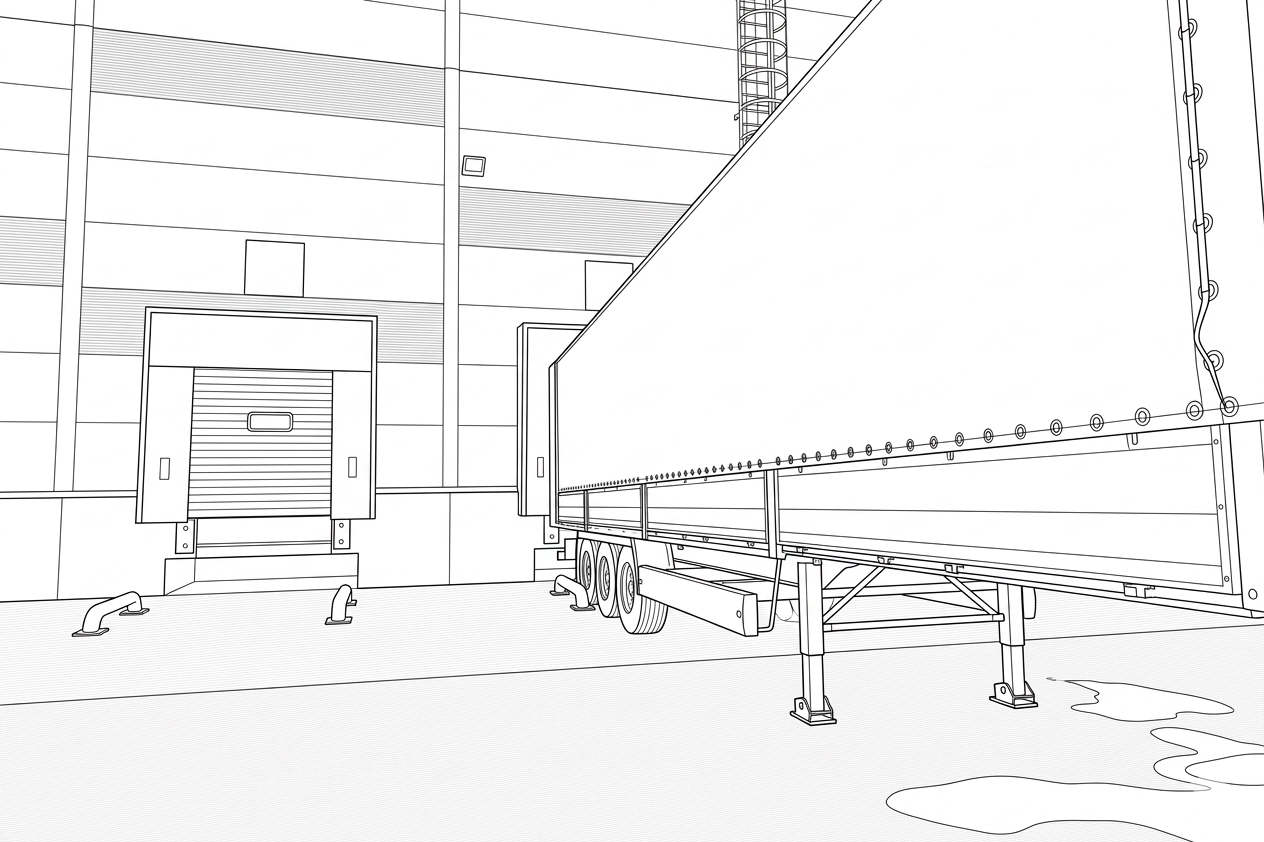
Dock equipment for smooth and safe logistics operations

Compliant with current regulations, our loading dock optimization solutions are designed to accommodate the traffic flow and operational constraints of various vehicles (heavy-duty trucks, pickup trucks, and vans), including safety stands and trestles, dock bumpers, loading bridges and plates, wheel chocks, wheel guides, and fabric barriers… Forankra works with your customers to meet their needs and improve the performance and safety of logistics and industrial sites.

What is dock equipment?

Dock equipment refers to all the devices installed at a loading dock to facilitate, secure, and optimize loading and unloading operations between a logistics facility and a truck.


In particular, this equipment helps to:

  • Meet regulatory requirements
  • Protect goods
  • Ensure safe truck maneuvering
  • Improve the flow of logistics operations
  • Reduce and prevent the risk of operator accidents
  • Preserve the condition of buildings and vehicles over time
    • Facilitate the installation of dock equipment

    Why upgrade dock equipment?

    The loading dock is one of the most strategic areas of a logistics facility. The right equipment can improve workflow management while protecting both personnel and infrastructure.

    With high-performance loading dock equipment, it is possible to:

    • Reduce loading and unloading times
    • Improve operator safety
    • Minimize damage to buildings and trucks
    • Optimize operator productivity

    A complete range of dock equipment

    Forankra offers a wide range of solutions for equipping or upgrading loading docks:

    Dock bumpers and protective barriers

    Dock bumpers effectively absorb impacts when trucks dock at loading docks. Essential for protecting buildings, docks, and logistics equipment, they minimize the repeated impacts caused by vehicle maneuvers. Available in a variety of materials and sizes, dock bumpers are designed to meet the specific requirements of each logistics site and provide a durable and safe solution.

    Safety stands and trestles

    Safety stands and trestles are used to stabilize trailers when they are uncoupled from the tractor. These devices are particularly common in logistics warehouses and loading docks, where trailers are often parked on their own.

    Deck and loading plates

    Loading ramps and platforms are essential pieces of equipment in warehouses and logistics facilities. They are used to facilitate the transfer of goods between the loading dock and transport vehicles, whether trucks or vans.

    Wheel chocks

    Wheel chocks are safety devices that prevent heavy vehicles from rolling away unexpectedly.

    Split wheel guides and standard wheel guides

    Breakaway and standard wheel stops are safety devices installed on the ground to help guide vehicles as they approach the loading dock.

    Warehouse and Parking Lot Equipment

    Corner guards, tubular steel protective edging, and corner protection bars are devices designed to protect indoor infrastructure from impacts and damage.

    Fabric barriers

    Textile barriers are wayfinding and partitioning solutions designed to organize, secure, and structure professional and public spaces. Practical and modular, they enable effective management of foot and vehicle traffic while providing clear and visible signage.

    Solutions tailored to your business

    Every logistics facility has its own unique challenges. Our dock equipment solutions are designed to meet the needs of:

    • Logistics warehouses
    • Distribution centers
    • Industrial facilities (food processing, cosmetics, chemicals, pharmaceuticals, textiles)
    • Transportation companies

    Benefits for businesses

    Investing in high-performance dock equipment delivers tangible results:


    • Reduced truck wait times
    • Improved logistics productivity
    • Fewer incidents and accidents
    • Protection of infrastructure
    • Optimized operating costs
    • Quick return on investment
    • Simplified maintenance

    Comprehensive support for your project

    We support you every step of the way:


    • Needs Assessment
      An engineering department capable of meeting your clients’ diverse needs
    • Customized Technical Recommendations
      Selection of equipment tailored to your clients’ operations
    • Maintenance and Support
      Ensuring the durability and performance of the equipment

    Frequently Asked Questions - Dock Equipment

    Loading dock equipment encompasses all the facilities installed in a loading area to optimize and ensure the safety of transfer operations between modes of transport and storage areas. It ensures that operations are carried out efficiently, accurately, and safely.

    The choice of dock equipment depends on your specific needs and the type of operations you perform. Among the most common options are:

    • Wheel stops and bumpers to ensure safe truck maneuvering and prevent damage
    • Safety chocks and stands to prevent vehicles from rolling away unexpectedly and secure cargo
    • Loading ramps and plates to facilitate the transfer of goods between the dock and the truck

    Yes, there are alternatives to dock levelers. Among the most common solutions are:

    • Loading plates: These are metal or aluminum ramps that bridge the gap between the dock and the truck. They are easy to install and suitable for light or occasional use.
    • Loading bridges: These are more robust, permanent structures that ensure a safe and stable transition between the dock and the vehicle, even for heavy or frequent loads.

    To protect people and goods, it is essential to implement several measures:

    • Regular maintenance: Keep the floor and warehouse clean to prevent slips and accidents.
    • Clear signage: Visible floor markings help delineate aisles and traffic areas.
    • Adequate lighting: Sufficient lighting improves visibility and reduces the risk of incidents (LED lights).
    • Condition of the loading dock: Regularly check that the loading dock is in good condition and that potentially hazardous areas are marked, or even eliminated if possible.
    • Appropriate equipment: Use high-quality, well-maintained equipment (airlocks and functional doors, bridges, etc.).
    • Communication of instructions: Clearly display hazards, rules, and procedures to follow using visible signs on the dock.

    Forankra offers a range of accessories designed to complement loading docks and enhance safety, handling, and user comfort in transfer areas:

    • Wheel chocks and wheel guides
    • Loading ramps and loading plates
    • Trestles and safety stands for trailers
    • Dock bumpers
    • Warehouse and parking equipment
    • Fabric barriers

    Forankra offers a wide range of dock equipment suitable for all types of loading areas, designed to improve the safety, smooth flow, and efficiency of cargo handling operations.

    To make loading operations more efficient and safer, several best practices can be implemented:

    • Properly equip the loading dock: loading bridges, bumpers, and appropriate ramps reduce transfer time and the risk of accidents.
    • Organize the space and workflow: plan traffic zones for vehicles and forklifts to avoid congestion.
    • Automate and digitize: use dock management systems (WMS, sensors, traffic lights) to coordinate truck arrivals and departures.
    • Train staff: educate operators on safety best practices and handling techniques.
    • Plan loading: load by priority, optimize weight distribution, and adapt the sequence based on destinations to save time.
    • Regular maintenance: inspect and maintain equipment to prevent breakdowns and delays.

    Most accidents occur during dock operations and truck loading/unloading. Below are the main hazards identified, along with the appropriate equipment used to prevent them (dock bumpers, dock levelers, etc.).

    Unexpected trailer departure
    During loading or unloading, the movement of pallet jacks and forklifts inside the trailer can cause the vehicle to move unexpectedly or slightly shift, potentially leading to serious falls. Installing a wheel chock (or wheel blocker) helps keep the vehicle stationary and secures the operation.

    Trailer tipping
    An unstable trailer can tip over, causing significant material damage and putting nearby workers at risk. The use of trailer support stands or safety trestles helps stabilize the unit.

    Pedestrian crushing risk
    Dock areas present a risk of pedestrians being crushed between two vehicles or between a truck and a wall. Breakaway steel wheel guides help align trucks properly while clearly marking the space reserved for heavy vehicles.

    Fall between the dock and the truck
    Poor judgment of the gap between the vehicle and the dock, or a moment of inattention, can result in a fall. Loading plates or ramps (also called dock plates or dock levelers) create a bridge between the truck and the dock, reducing gaps and making handling operations safer.

    Slipping in bad weather
    Rain or ice can make surfaces extremely slippery, increasing the risk of falls on the connecting bridge. Installing anti-slip surfaces is recommended. A dock shelter also protects the warehouse from weather infiltration and improves working conditions.

    Impacts against the dock
    During maneuvering, trucks may collide with the dock, damaging buildings and equipment. Dock bumpers, made of rubber or steel, absorb impacts and protect the infrastructure.

    The safety of loading docks is governed by the Labor Code.

    • Article R 233-45: “The layout and design of loading ramps and docks must prevent workers from falling.”
    • Article R 235-3.1.5: “Indoor and outdoor workplaces must be designed so that pedestrians and vehicles can move about safely.”

    These articles therefore require that the design of loading docks and traffic areas ensure the protection of employees and minimize the risk of accidents.

    I'm signing up for the newsletter: