


 Français

Lifting



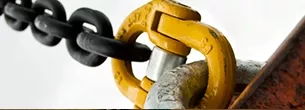
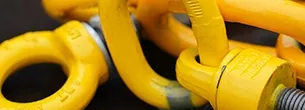
Forankra’s Lifting category offers a comprehensive range of solutions designed to secure the transport of goods and equipment in commercial vehicles, vans, and heavy-duty trucks. It is specifically aimed at resellers, specialized distributors, body shops, and fleet managers looking to offer reliable, modular equipment that meets professional standards.
The product selection covers all the needs of the heavy-load handling and transport market:
- Textile slings: flexible and lightweight, suitable for various types of loads and used for safe and fast handling.
- Chain slings: designed to withstand heavy loads, ideal for industrial and construction applications.
- Lifting hooks: standard and safety hooks, compatible with various lifting systems.
- Lifting shackles: for assembling and securing loads, ensuring reliability and strength.
- Lifting accessories
The lifting equipment we offer is designed to:
- Ensure the safety of operators and cargo
- Withstand heavy-duty use in industrial and logistics environments
- Comply with European standards (EN-12195.3) and regulations governing lifting and material handling
FAQ – Lifting
What do we mean by lifting equipment and accessories?
Lifting equipment refers to all devices and components used to lift or move heavy loads: slings (textile, chain, wire rope), hooks, shackles, rings, and other accessories designed to connect the load to the lifting equipment. This is the interface between the crane and the load.
What are the common types of lifting slings?
Textile slings: lightweight, flexible, and easy to handle. They come in round, flat, and endless varieties.
Chain slings: suitable for very heavy loads and harsh environments (construction sites, industrial settings, chemical plants).
How often should lifting accessories be inspected?
A visual inspection must be performed before each use by a certified professional or an authorized company to verify the absence of obvious damage. In addition, a thorough inspection by qualified personnel is recommended at least once a year for all lifting equipment, and every 6 months for accessories used intensively or for critical applications.
What should you check when inspecting a lifting accessory?
During each inspection:
- Sling straps must be free of cuts, abrasions, discoloration, or illegible labels.
- Hooks and shackles must not show any deformation, cracks, or excessive wear.
- Chains must not be twisted, stretched, or damaged.
- Any equipment with a defect must be taken out of service.
How do you choose the right lifting capacity?
The capacity of each accessory must exceed the load to be lifted, taking into account a safety margin. Products must be clearly marked with their maximum working load (MWL) and comply with current standards (European EN standards, CE certifications, or international standards).
You should also refer to the machine’s user manuals to verify the correct attachment points.
How should lifting accessories be stored to extend their service life?
To maintain their performance:
- Store in a dry, well-ventilated area, protected from the elements.
- Avoid contact with chemicals, abrasives, or direct UV light.
- Hang or store slings to prevent deformation.
Proper maintenance and storage extend the equipment’s lifespan and ensure its reliability during us


Questions & Answers
Do the lifting slings comply with current standards?
Which colour corresponds to which CMU?
Can slings be customised?
Am I allowed to use a damaged sling?
Comment choisir la bonne capacité de levage pour une élingue textile ?
Il faut se référer à la charge maximale d’utilisation (CMU) indiquée sur l’étiquette et de la méthode de levage. Il faut également tenir compte du type de levage, de la charge et des accessoires utilisés.
Les élingues textiles sont-elles conformes aux normes ?
Toutes les élingues Forankra respectent les normes EN 1492-1 et EN 1492-2, assurant leur sécurité et leur traçabilité pour le levage professionnel.
What grade is there for chain slings?
Does diameter affect strength?
Comment choisir le nombre de brins d’une élingue chaîne ?
Le nombre de brins (1, 2, 3 ou 4) dépend du type de charge, de sa stabilité et de ses points de fixation. Les élingues à plusieurs brins permettent un levage plus équilibré et sécurisé des charges volumineuses.
Quels accessoires peuvent être utilisés avec une élingue chaîne ?
Les élingues peuvent être équipées de crochets, maillons de tête, manilles ou crochets raccourcisseurs, permettant d’adapter la longueur et la fixation aux différents engins de levage et types de charges.
Les élingues chaîne sont-elles adaptées aux environnements corrosifs ?
Oui, les élingues en acier sont adaptées aux environnements humides ou exposés à la corrosion, offrant sécurité et durabilité dans des conditions exigeantes.
What grade of lifting hooks are there?
À quoi sert un crochet de levage ?
Un crochet de levage permet de soulever et déplacer des charges lourdes en toute sécurité. Il constitue un élément clé des équipements de levage tels que les grues, palans ou treuils, assurant la liaison fiable entre l’engin de levage et la charge à manipuler.
Quels types de crochets de levage sont disponibles chez Forankra ?
Forankra propose des crochets à œil, à émerillon et à chape, adaptés aux différentes charges et environnements de levage.
Les crochets de levage peuvent-ils pivoter ?
Certains modèles, notamment les crochets à émerillon, offrent une rotation à 360° pour un positionnement précis de la charge, facilitant la manipulation lors du levage.
What grade of lifting shackle is available?
Qu’est-ce qu’une manille de levage ?
Une manille de levage est un accessoire de liaison utilisé pour connecter en toute sécurité différents équipements comme des élingues, des chaînes ou des câbles à une charge ou à un point d’ancrage. Elle se compose d’un corps métallique (droit ou lyre) et d’un axe de fermeture, assurant une fixation fiable lors des opérations de levage.
Quelle est la différence entre une manille droite et une manille lyre ?
Manille droite : adaptée aux levages en ligne directe, avec une seule direction de traction
Manille lyre : idéale pour les levages multi-brins ou avec angles, grâce à sa forme arrondie
La manille lyre est généralement plus polyvalente, notamment lorsque plusieurs élingues sont utilisées
Qu’est-ce que la CMU d’une manille ?
La CMU (Charge Maximale d’Utilisation) correspond à la charge maximale que la manille peut supporter en toute sécurité. Cette valeur est indiquée directement sur le produit et doit impérativement être respectée pour éviter tout risque de rupture.
Quelle est la différence entre un axe vissé et un axe boulonné ?
Axe vissé : rapide à installer, idéal pour des utilisations ponctuelles
Axe boulonné avec goupille : plus sécurisé, recommandé pour les montages durables ou soumis à des vibrations
Le choix dépend principalement de la fréquence d’utilisation et du niveau de sécurité requis
Peut-on utiliser une manille avec une charge inclinée ?
Les manilles sont conçues pour être utilisées dans l’axe. Une charge inclinée ou latérale peut réduire leur capacité de levage et augmenter les risques. Dans ce cas, il est nécessaire d’adapter la CMU ou d’utiliser une configuration appropriée.
Les manilles de levage sont-elles soumises à une réglementation ?
Oui, les manilles doivent répondre à des normes strictes (comme la norme EN 13889) et comporter des marquages obligatoires : CMU, conformité CE, fabricant, etc. Elles doivent également être contrôlées régulièrement dans le cadre des vérifications périodiques.
What grade is available for lifting?
Qu’est-ce qu’un accessoire de levage ?
Un accessoire de levage est un équipement intermédiaire utilisé entre un appareil de levage (grue, palan, treuil…) et la charge à manipuler. Il permet d’assurer la liaison, la prise et la sécurisation de la charge lors des opérations de manutention.
À quoi servent les anneaux de levage ?
Les anneaux de levage permettent de créer un point d’accroche directement sur une charge afin de la connecter à une élingue chaîne, câble ou textile. Ils facilitent ainsi les opérations de levage en garantissant une liaison fiable et adaptée.
Quelle est la différence entre un anneau de levage mâle et femelle ?
Anneau de levage mâle : filetage extérieur, conforme à la norme DIN 580
Anneau de levage femelle : filetage intérieur, conforme à la norme DIN 582
Le choix dépend du type de fixation disponible sur la charge à lever.
Qu’est-ce qu’un anneau de levage articulé ?
Un anneau de levage articulé est conçu pour s’orienter en fonction de la direction de traction. Il permet d’éviter les contraintes mécaniques et d’optimiser la répartition de la charge, notamment lors de levages inclinés ou complexes.