Professional lifting equipment and accessories for resellers and distributors
Forankra offers a wide range of lifting equipment and accessories adapted to the needs of distributors, resellers, body shops and fleet managers who wish to offer equipment that complies with current standards.
Lifting is the act of raising, lifting, and handling loads using specialized equipment. Unlike lashing, which secures and holds loads during transport, lifting occurs during the (un)loading, handling, and positioning phases of goods.
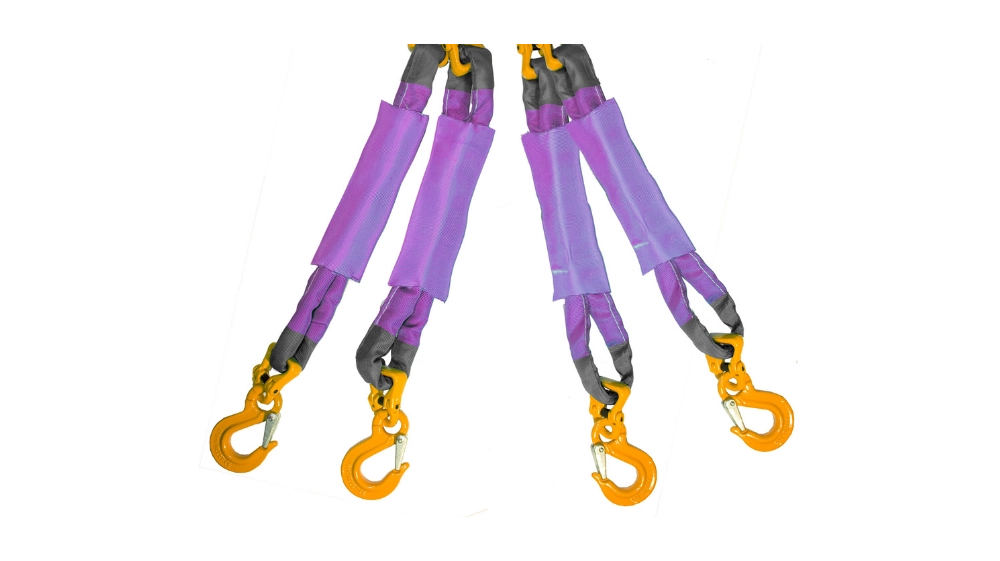
Lifting utilizes lifting equipment such as cranes, manual or electric hoists, winches, gantries, overhead cranes, and lifting accessories like slings, lifting hooks, shackles, lifting rings, and chains/cables.
How to lift heavy loads?
The WLL (Working Load Limit) is the maximum load beyond which lifting equipment must never be used. It is the maximum load declared by the manufacturer. Exceeding it exposes the equipment to a risk of breakage and the operator to an accident.
The WLL depends on:
The material (steel, textile, synthetic)
The geometric dimensions
The number of sling legs in the sling configuration
The lifting angle (vertical load = maximum WLL)
The operating conditions (temperature, environment, cycling)
Forankra certified lifting solutions
For over 40 years, Forankra has offered a wide range of certified lifting equipment and accessories to distributors and resellers. Our products are used by leading players in French and international industry.
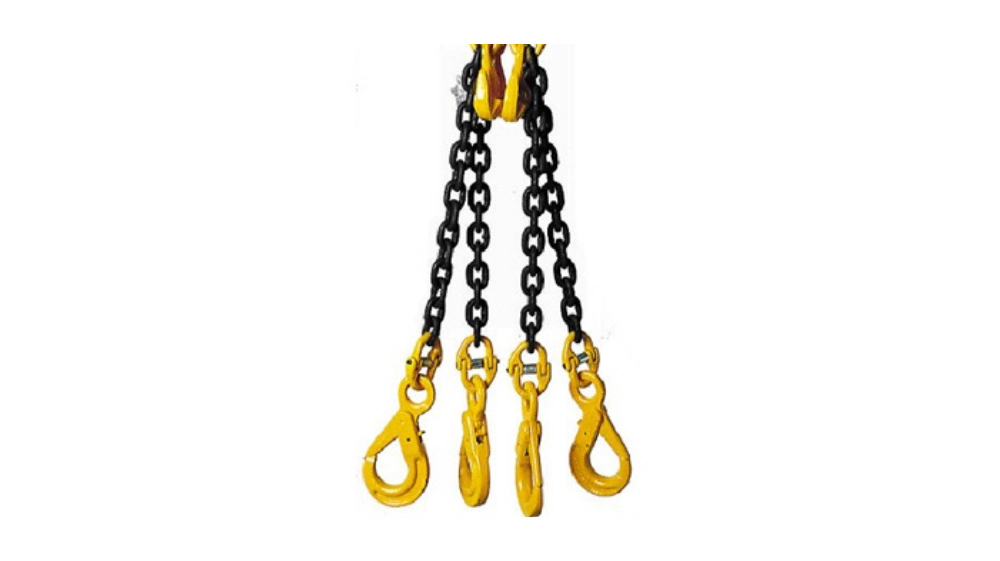
Chain slings
Certified Grade 80, 100, and 120 chains. Resistant up to 400°C, protected against sharp edges and chemicals. Permanent WLL markings, certificate provided.
Any lifting operation presenting a particular risk requires a written lifting plan. This is a legal requirement under the French Labor Code (Article R.4323-64).
Mandatory Content:
Detailed description of the load: mass, geometry, and point of equilibrium
Equipment used: type, capacity, and CE certificate
Slinging configuration: number of slings, angle, and WLL (Working Load Limit) used
Travel route: from the starting point to the destination
Work area: location, access, and safety distances
Personnel and roles: crane operator, crane operator, and supervisors
Safety measures: PPE, signage, and emergency procedures
The different types of lifting
Standard lifting
Simple configuration with one or two slings, balanced load, vertical angle. Ideal for most common operations.
Lifting with spreader bar
The lifting beam distributes the load across multiple attachment points. It is used for long, asymmetrical loads or loads with fragile areas. Complex configurations require a detailed lifting plan.
Lifting with clamps
The lifting clamps grip the load directly. Without a sling, setup is quick and safe.
Lifting risks and accident prevention
Equipment or sling failure (overload, wear, hidden defect)
Load fall (improper slinging, exceeding the safe working load)
Personnel crushing (working under load)
Muscle or joint injuries (poor posture, manual lifting)
Accidents (collisions, poorly defined area)
Workplace safety: legal obligations
Labor Code
Articles R.4323-28 to R.4323-90 define the obligations relating to lifting equipment and operations. Article R.4323-99 specifies the penalties for non-compliance.
• Machinery Directive 2006/42/EC
All lifting equipment placed on the European market must bear the CE marking and be accompanied by a declaration of conformity.
• Periodic General Inspection (VGP)
Mandatory since the decree of July 28, 2004. All lifting equipment must be inspected at least once a year by an authorized person.
The WLL (Working Load Limit) is the maximum load limit beyond which equipment should not be used. Exceeding it exposes the equipment to breakage and the operator to accident.
Labour Code (articles R.4323-28 to R.4323-90), Machinery Directive 2006/42/EC, standards EN 13001 (cranes), EN 1492 (textile slings), EN 818-4 (chains), EN 13801-13802 (hooks and shackles).
The choice depends on the nature and fragility of the load, environmental conditions, required capacity, lifting configuration (strands and angle), and company best practices.
It is a written document describing the lifting operation (load, equipment, configuration, route, area, personnel, safety). It is mandatory for any non-routine operation according to the Labor Code.
Several indicators must be taken into account such as the mandatory CE marking, the indelible CMU plate, the EN certification, the manufacturer's declaration of conformity and the test certificate.



 Français
_1.webp)